Apologies...
and coping with smoke

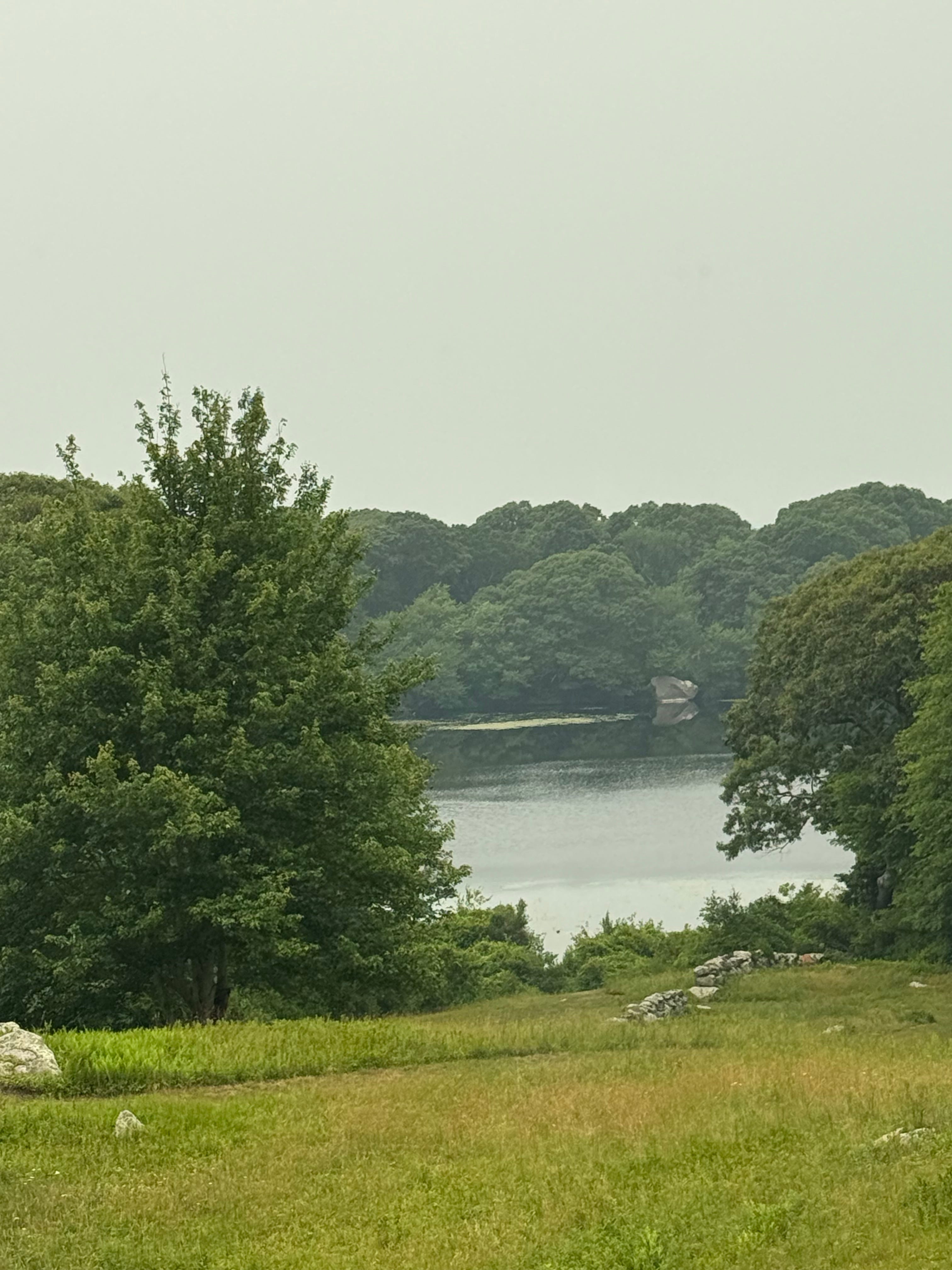
The peak of summer, unbreathable air, and I’m in my bedroom at the computer with a janky AC unit in the window, no air filtration system to speak of, and my vacuum running on the floor beside me because I think it has a HEPA filter.
I’m in an original 1970’s house in a 2026 climate. To work in the kitchen (no AC, no vacuum) I wear an old N95 mask I pulled from a pocket of my carry-on, scrunched-up and stained, last used in Delhi when the AQI was 350, so it’s ick/thick, but I don’t care. I’m cooking for the apocalypse.
First pumpkin pie, after a housebound foray into last year’s cans. We had condensed oat milk (my husband has Alpha-gal, that headlining allergy from a tick bite—another climate change phenom), and the ingredients for pesto, and vegetables he picked up earlier today under a brief blue sky. I roasted them and a chicken is next. I wouldn’t dream of using the oven on sunnier days, but the smoke? It’s making the air cooler.
I learned a new word today: albedo. The smoke is now reflecting the sun. What fresh hell is this?
Rhetorical, but this is not: I owe you an apology. I can’t keep up with Substack. I thought I could. I thought I could parcel out bits of the book (oh so nicely divided into 85 essays—a couple years worth of posts!!), but that has come to feel like a bit of rip-off when likely many of you have Flora Culture by now. I’m sending a section tonight that speaks to this precise moment for me (there have been so many newsy things of late that make the Flora Culture essays ring a little too true), but please try figure out some way to not pay for this. I can’t figure out how to make this newsletter free (likely Substack’s intent—duh!). Yes, I can export all your contacts and try another platform, (like Mail Chimp which I used to have!—open to suggestions), but I’ve been too busy with events and promotion for the book to get to it. I’m sorry.
The book is doing well: hitting some high notes in the media, but nothing like Cultivated in terms of sales. That book came out in Covid and people were trapped at home and discovering gardening…and Instagram was wildly different in 2020, so who knows. If it does hit a reprint I’ll be correcting the errors in the text which have made me slightly crazy (and I want to thank Rick Schwartz for his forensic reading).
For those of you in the smoke, I hope this missive saves you from looking out the window and searching for a sunset you will not find. Do know—there’s some hope in the piece below. X CG
Do not be
overwhelmed.
—WANGARI MAATHAI
Writing this book has exposed me to some hard truths. Compounding the stress, two massive environmental upheavals directly affected my life and no doubt yours: the COVID-19 pandemic and climate change. Climate change where I live in Canada looks like heat domes, smoke, and fires. These horrors can’t all be blamed solely on climate change; poor forestry practices, clear-cutting, road building, and single species plantations have led to increased burns, landslides, and toxic smoke. Seven years ago, we had only a handful apocalyptic days—now, red suns, haze, outdoor masks, air filters, and Air Quality Index (AQI) reports have become a part of summer.
And what does that feel like, to lose the world as you knew it? Devastating, as many Indigenous and displaced people know too well. Terry Tempest Williams had this to say in 1995: “Confronted with the knowledge of dozens of apparently random disasters each day, what can a human heart do but slam its doors? No mortal can grieve that much. We didn’t evolve to cope with tragedy on a global scale.”
So how do you cope? I’m going to present a few ideas gleaned from an article I read when I was flailing around, trapped in my house on a smoky, sunny day. It’s titled “Here’s What You Can Do to Cope with Your Anxieties about Climate Change” and was written by Connie Chang, a Californian who migrated east then returned west to a burning state. Here’s my take on her piece.
Accept the disorientation, the dread, the psychic torment, the angst, the grief. Don’t push thoughts or emotions away, rather give them a set period of time to claim you as their own.
As we scroll from one climate horror to the next we reinforce our angst without necessarily feeling it. Stop. Don’t just confirm your thoughts; feel your emotions.
Try to process the emotions through art or any creative method that resonates for you.
Some people have improved their mindset by grieving with the earth—walking barefoot, swimming, or writing a requiem for a dying glacier. Holding loss in your heart and mind while creating can help you process your emotions, as can breathing exercises or anything that helps you focus on the now.
Those are internal methods, but they lead me to an aside: in a previous life I had a newspaper column titled “Livin’ the Life,” which was largely a health column. I reviewed spa treatments (a great gig if you can get it), but also botanical wonders, obscure treatments, and books. One of the books I was drawn to review was Self-Help Inc.: Makeover Culture in American Life by the cultural critic Micki McGee. She argued the burgeoning self-help movement (this was 2005, three years before Gwyneth Paltrow’s Goop) emphasized individual rather than social change. This is a huge topic—individualism—but suffice it to say it plays into climate change insofar as one of the ways you can ameliorate your pain and that of others is through political action. We are best served by serving the world, not ourselves.
As Chang writes, “If you had a neighbor that dumped oil on your property, for example, you’d file a complaint with your city council.” Having run for both my city council and my province’s legislative assembly, let me tell you that actively doing something about the state of the planet was one of the happiest, most intense, and most energized periods in my life.
So show up. The world is run by people who sit through long meetings, so speak up at them, call people to account, advocate, rage, protest, and engage. You can make change. And all the evidence supports the fact you’ll feel more empowered if you try.
Still, if you feel frozen by the scale of the tragedies to come, you’re not alone. The term for this is psychic numbing. When we ask ourselves, “Can I change the world today?,” we’ll likely come up with the answer “no.” But if we ask ourselves, “Can I change one person’s world today?,” the answer is more likely to be “yes.”
People get demotivated from helping people by the bad feelings they get when they realize there are others (human or otherwise) that they cannot help. The psychologist Paul Slovic suggests, “You should not be demotivated from doing what you can do by the fact you can’t do it all. Do what you can do.” Resist compassion fatigue by focusing on one story, one person, one species. Psychologists have proven this: focus not on statistical lives, but identifiable lives.
The trick is one of scale.